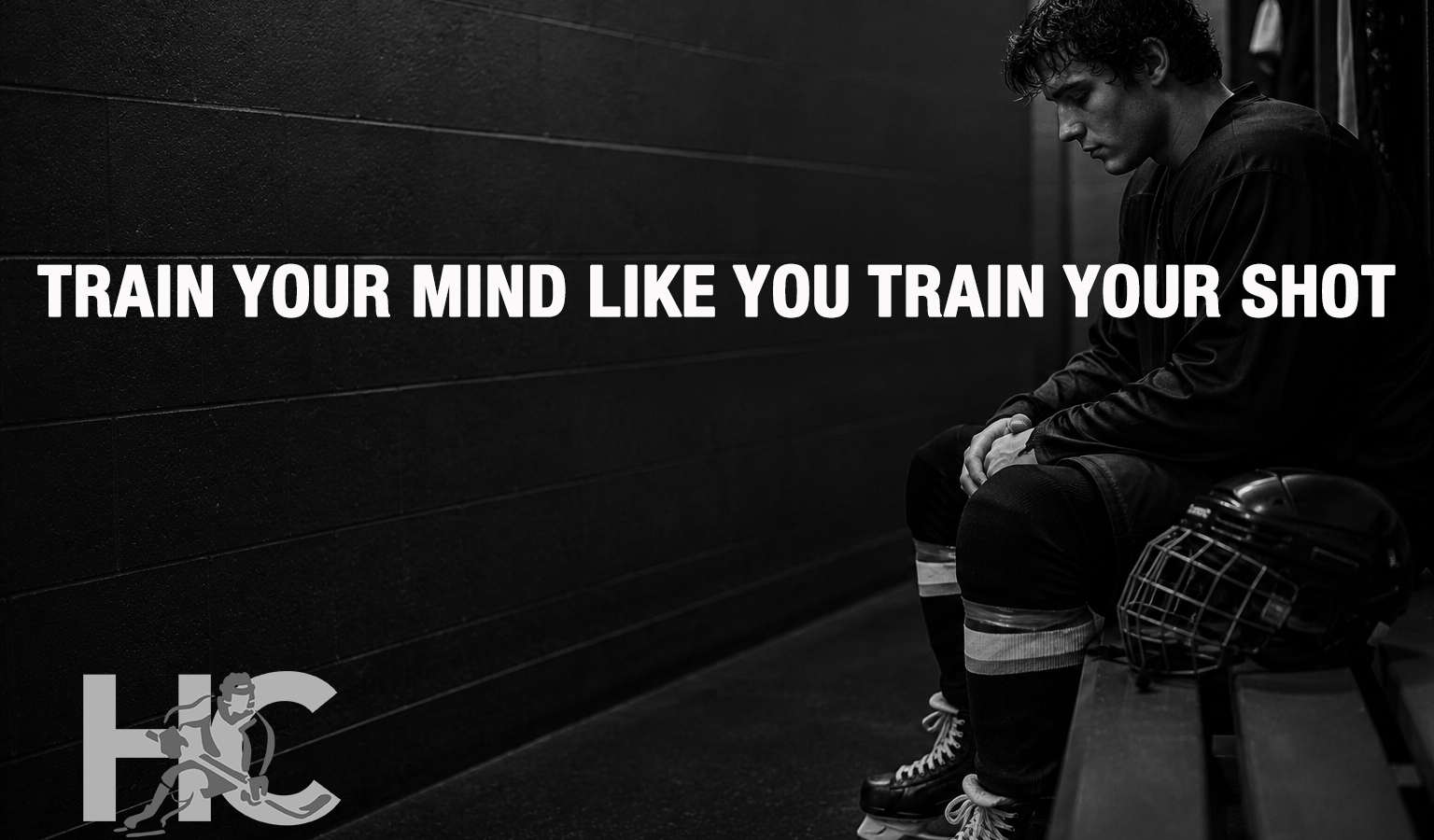
Physical training gets structured programs, tracked reps, and measurable progress. Mental preparation, for most players, gets almost nothing. It’s treated as something a player either has or doesn’t, rather than a skill that can actually be built the same deliberate way strength or conditioning is. That gap shows up most in exactly the moments that matter: a big game, a bad shift, a slump that starts feeding on itself.
Confidence Is Built, Not Found
Players and parents often talk about confidence like it’s a mood, something a player either has that day or doesn’t. In practice, confidence is closer to a skill built through repetition, specifically the repetition of how a player responds to mistakes. A player who has a plan for what to do after a bad shift recovers faster than one who’s just hoping the bad feeling passes on its own.
This is worth building before it’s needed, not during a slump. Waiting until a player is already struggling to start thinking about mental preparation is like waiting until game day to start training.
What Actually Helps Under Pressure
A pre-game routine that doesn’t change.
Consistency itself is calming. A routine a player controls, regardless of opponent or stakes, gives them something stable to return to when a game gets stressful.
A short reset habit for bad shifts.
Something concrete and physical (a breath, a specific word, a look at the bench) that a player uses every single time, so it becomes automatic rather than something they have to remember to do under pressure.
Separating effort from outcome in self-talk.
A player who ties their entire self-assessment to whether they scored is going to have a rough relationship with a sport where even great players go scoreless most nights. Evaluating the process (positioning, effort, decision-making) gives a player something they actually control.
Talking about pressure directly instead of around it.
Families sometimes avoid discussing nerves or a bad performance out of an instinct to protect the player. Often what actually helps is naming it directly and matter-of-factly, which tends to shrink it rather than feed it.
Mental Preparation, By Timing
| When | What to Focus On |
|---|---|
| Off-season | Building the actual skill: routines, reset habits, and self-talk patterns, practiced when there’s no pressure |
| Pre-game | A consistent routine the player controls |
| In-game, after a mistake | The reset habit, used every time, not just when remembered |
| Post-game | Evaluating process and effort, not just the scoresheet |
This Isn’t Something to Leave to Chance
The players who handle pressure well aren’t necessarily the most naturally confident ones. They’re usually the ones who’ve actually practiced how they respond to adversity, the same way they’ve practiced a wrist shot or an edge. Mental preparation deserves the same intentional approach as any other part of a player’s development, not an afterthought brought up only after a rough stretch.
We’ve been working on a full resource on this exact subject, a book focused specifically on building confidence, focus, and composure under pressure for hockey players. It’s still in progress, but the prologue is available now at hcsmperformance.com/mental-performance if you want an early look at the approach.
Common Mistakes Families Make
- Only addressing mental preparation after a slump starts. By then, a player is trying to learn a skill under the exact conditions that make it hardest to learn.
- Treating confidence as fixed. It’s built through repetition like anything else, not a trait a player either has or doesn’t.
- Avoiding conversations about pressure or nerves. Naming it directly tends to help more than working around it.
- Judging every performance by the scoresheet. This leaves a player with no stable way to evaluate a game where the puck didn’t bounce their way.
The Bottom Line
Mental preparation is a skill, not a personality trait, and it responds to the same kind of deliberate practice as any physical part of a player’s game. Building it before it’s needed, through routines, reset habits, and honest conversations about pressure, puts a player in a far stronger position than trying to find composure for the first time in a moment that already matters.
If you want to talk through what this could look like for your player specifically, we’re happy to talk.
Schedule a complimentary consultation to discuss where your player is and what the road ahead looks like. No obligation — just an honest conversation.
Schedule a Free Consultation