
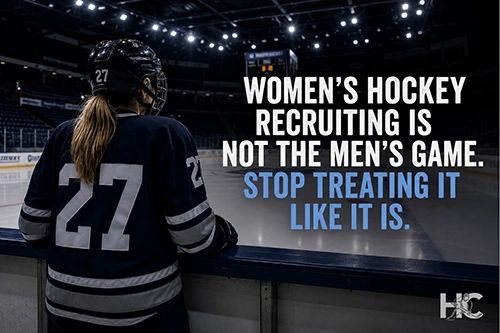
Women’s hockey recruiting does not follow the same path as men’s hockey. Different timelines, different roster dynamics, different evaluation priorities, different communication windows. When families use a men’s hockey recruiting strategy for a women’s player, opportunities can quietly disappear before they even realize they existed.
The Problem Most Families Don’t See Coming
This is one of the most important things we tell every family we work with: the women’s game operates on its own calendar with its own rules. And yet most families — and honestly, most advisors — are applying a men’s hockey playbook to a women’s hockey path.
The result is predictable. Families miss early contact windows because they assume “it’s too soon.” They over-index on showcases that college coaches for women’s programs don’t actually prioritize. They underestimate how early Division I programs are building their recruiting lists. And they ignore D2, D3, and ACHA opportunities that offer exceptional hockey and great academics.
The women’s recruiting calendar runs differently. The number of available spots at top programs is different. The visibility landscape is different. The NIL conversation is different. Treating it like the men’s game costs players real opportunities.
The Timeline Runs Earlier Than Most Families Expect
Division I women’s hockey programs are actively building recruiting lists well before families realize the clock is running. At the top programs, coaches are identifying players during their bantam and midget years — not their junior years.
This doesn’t mean every family needs to panic when their daughter is 13. But it does mean that waiting until a player’s U16 or U18 season to start thinking seriously about recruitment is often too late for the highest-level programs.
Roster Math Is Different in the Women’s Game
Women’s hockey rosters at the Division I level are smaller than men’s rosters. Fewer available spots means more competition for each position — and it means coaches are making decisions earlier and with less flexibility to wait and see how a player develops.
Which Showcases and Events Actually Matter
One of the most common mistakes in women’s hockey recruiting is treating the showcase calendar the same way men’s families do. Women’s college coaches have their own evaluation priorities — specific tournaments, specific age groups, and specific circuits that carry weight in the women’s game.
D2, D3, and ACHA Deserve Serious Consideration
The women’s hockey landscape offers more options than most families initially recognize. Division II and Division III programs, as well as ACHA programs, provide high-quality hockey environments and — in many cases — exceptional academic institutions.
Academics Play a Bigger Role Than Families Realize
In women’s college hockey, the academic profile of a recruit matters more than in many other sports. A strong academic record opens doors in women’s hockey that might otherwise stay closed.
The NIL Conversation Is Different Too
Name, Image, and Likeness opportunities exist in women’s college hockey, but the landscape looks different than it does in men’s hockey. The scale is different, the expectations are different, and the compliance considerations are the same.
What a Smart Strategy Actually Looks Like
The goal is to build a long-term plan that fits the specific player, the specific timeline of the women’s game, and the specific programs that make sense for her development and her future. Women’s hockey deserves a recruiting strategy built specifically for women’s hockey.
Schedule a complimentary consultation to discuss where your player is and what the road ahead looks like. No obligation — just an honest conversation.
Schedule a Free Consultation